Istanbul in 3 Days: The No-Filler Itinerary
Three days is just enough to scratch Istanbul's surface properly. This itinerary splits your time between the Historic Peninsula, the creative European neighborhoods, and a full day on the Asian side that most tourists never see. No filler stops, no tourist-trap restaurants, and direct opinions on what's actually worth your time in 2026.
Powered by ITINE
Get this guide as a tappable itinerary
Day-by-day plan, audio tours, and one-tap Google Maps — completely free.
Destinations
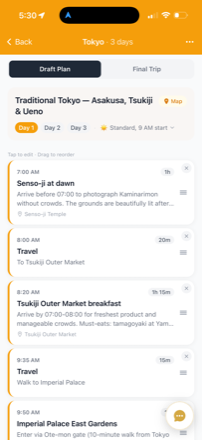
Your Itinerary
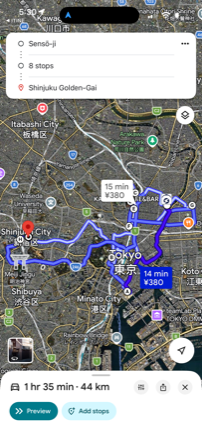
Google Maps
Day 1 — Sultanahmet, Eminonu, Fatih
Sultanahmet & Eminonu — The Historic Peninsula
Imperial Istanbul: Empires, Bazaars & Bridge Sunsets
Your first day covers 2,500 years of history within walking distance. Start at the Hagia Sophia before the crowds arrive, work your way through the Grand Bazaar mid-afternoon when vendors are relaxed and negotiable, and finish watching the sun drop behind the Suleymaniye from Galata Bridge. This is the Istanbul postcards are made of — but done properly.
Morning Edition
Hagia Sophia & the Sultanahmet CoreHagia Sophia Grand Mosque
Get here by 08:30 or suffer the consequences. By 10am the courtyard is a wall of tour groups and the interior becomes impossible to photograph. The 1,500-year-old dome still makes your jaw drop even if you've seen a thousand photos. Women need to cover their heads (scarves available free at the entrance), shoes come off, and there's no entry fee since the reconversion to a mosque.
Arrive before 09:00 — the difference in crowd density between 08:30 and 10:00 is staggering.
The upper gallery has been largely closed to tourists since the 2020 reconversion to a mosque. Check current access status before visiting — policies change frequently.
Prayer times close the mosque to tourists for 30-45 minutes. Check the daily schedule posted at the entrance.
Sultan Ahmed Mosque (Blue Mosque)
Right across Sultanahmet Square — the six minarets and cascading domes are more photogenic from outside than in. The interior is undergoing a multi-year restoration, so large sections may be draped in scaffolding. Still worth a 20-minute visit for the remaining Iznik tilework, but don't spend an hour here. The real magic is the exterior proportions against the morning sky.
Visit between prayer times. The mosque closes to tourists 30 minutes before each prayer.
The tourist entrance is on the south side (Hippodrome side), not the main courtyard.
Turkish Breakfast at Palatium Cafe
Skip every restaurant with a menu in 6 languages and a guy out front trying to seat you. Walk two blocks south to Palatium on Kucuk Ayasofya Caddesi for a proper serpme kahvalti (spread breakfast) with sucuk, menemen, fresh simit, and unlimited cay. The portions are honest and the terrace has partial sea views without the Sultanahmet markup.
Ask for 'kahvalti tabagi' — the full breakfast plate — rather than ordering items individually.
The tourist restaurants along Divan Yolu charge 2-3x for worse food. Avoid them.
Afternoon Edition
Underground Secrets & the Grand BazaarBasilica Cistern
The 2022 renovation added atmospheric lighting and a mirrored walkway that's striking — this isn't the dim, dripping cave it used to be. The Medusa head columns are at the far end and worth the walk. Book your timed-entry ticket online the day before; the walk-up line regularly hits 45 minutes by early afternoon.
Book at muze.gen.tr — the official ticket site. Third-party sites charge a 30-50% markup for the same ticket.
The 12:30-13:30 slot tends to be emptiest as tour groups break for lunch.
Grand Bazaar
Sixty-one covered streets, over 4,000 shops, and centuries of commercial energy that makes any mall feel soulless. Don't come with a shopping list — come to get lost. The best approach: enter from the Beyazit Gate, aim vaguely toward the center (the old bedesten), and let the labyrinth do its work. Leather goods, ceramics, and textiles are the standout buys. Turkish lamps are beautiful but a nightmare to transport.
Closed on Sundays. Open Monday-Saturday 09:00-19:00.
Negotiate. Start at 40-50% of the first price offered. If the vendor seems offended, you're doing it right.
The deeper inside the bazaar, the better the prices. The shops near the main gates have the highest tourist markup.
For quality Turkish ceramics, look for shops selling hand-painted Iznik-style pieces — the mass-produced stuff chips within months.
Nuruosmaniye to Spice Bazaar Walk
Exit the Grand Bazaar through the ornate Nuruosmaniye Gate and walk downhill toward Eminonu. This 15-minute walk through the backstreets of Fatih passes through the city's actual textile district — where locals buy fabric, not tourists. The urban density and street energy here is pure Istanbul, no curation required.
The streets between the two bazaars have excellent street food. Look for fresh simit carts and midye dolma (stuffed mussels) vendors.
Evening Edition
Spice Bazaar, Bridge Views & Eminonu DinnerSpice Bazaar (Misir Carsisi)
Smaller, more manageable, and more photogenic than the Grand Bazaar. The L-shaped hall smells incredible — Turkish delight, dried fruits, spice mixes, and saffron fill the air. Buy your lokum (Turkish delight) here rather than in Sultanahmet gift shops; the quality is noticeably better and prices are 30-40% lower. Hafiz Mustafa 1864, just outside the bazaar entrance, sells the best pistachio lokum in the district.
The shops at the far ends of the L-shape tend to be less touristy with better prices.
If buying saffron, ask to smell it first. Real saffron has an intense, slightly bitter scent. Cheap saffron is often dyed safflower.
Galata Bridge Sunset Walk
Walk across Galata Bridge as the sun sets behind the Suleymaniye Mosque silhouette. The lower deck is lined with fish restaurants (mediocre food, great atmosphere), and the upper deck has dozens of fishermen whose lines create an oddly poetic scene against the Golden Horn. This is one of Istanbul's great free experiences. The Karakoy side gives you the clearest view back toward the mosques.
The bridge faces west — sunset light is best from the middle or Karakoy (north) end.
Don't eat at the fish restaurants underneath the bridge. The view is the only thing going for them.
Dinner at Hamdi Restaurant
Hamdi is a well-known kebab restaurant near Eminonu, operating since 1960, with an excellent terrace view over the Golden Horn. Get a terrace table if weather allows — the panorama is absurd for a kebab restaurant. Order the Urfa kebab or the Ali Nazik (smoky eggplant with lamb). The food is good, but the clientele is predominantly tourist-oriented and prices reflect it. Still, the quality gap between Hamdi and the tourist traps near the Spice Bazaar is real. A full meal with drinks runs 800-1,200 TRY per person.
Reserve a terrace table for dinner, especially on weekends. Call ahead or book through their website.
The famous balik ekmek (fish sandwich) boats at Eminonu have been relocated during waterfront renovations, and the remaining vendors near Eminonu charge tourist prices. For a better fish sandwich, head to Karakoy or Kadikoy.
Day 2 — Beyoglu, Galata, Cihangir, Karakoy
Beyoglu, Galata & Cihangir — The Creative European Side
Art, Coffee & Rooftops: Modern Istanbul's Beating Heart
Day two moves to the neighborhoods where Istanbullus actually hang out. Start with a lazy Cihangir breakfast, climb the Galata Tower for a panorama that puts the whole city in context, browse independent galleries and vintage shops, and end the night with meze and raki in Asmalimescit. This is Istanbul beyond the mosques — creative, young, loud, and addictive.
Morning Edition
Cihangir Breakfast & Galata HeightsBreakfast at Van Kahvalti Evi
The cult-favorite Kurdish-Turkish breakfast spot in Cihangir. The name means 'Van Breakfast House' and the spread is absurd: twenty-something small plates of honey, kaymak, cheeses, otlu peynir (herb cheese from eastern Turkey), eggs, and bread that keeps coming. Expect a weekend queue, but the wait is part of the Cihangir experience. This breakfast will ruin hotel buffets for you permanently.
Weekday mornings are dramatically calmer than weekends. If it's Saturday or Sunday, arrive before 09:30 or expect a 30-minute wait.
Order the 'Van kahvalti' set for two even if you're solo — the individual plates aren't the same experience.
Cihangir to Galata Downhill Walk
Walk from Cihangir through the steep, cat-filled streets toward Galata. This neighborhood is Istanbul's creative-class enclave: tiny concept stores, independent coffee roasters, and bookshops with cafe nooks. Stop at Kronotrop Coffee on Firuzaga Mahallesi for an excellent flat white — they roast their own beans and the baristas actually care. The walk starts downhill from Cihangir, but note that reaching the Galata Tower involves going back uphill — it sits on its own hill. The streets are lined with gorgeous but crumbling late Ottoman-era neoclassical buildings.
Cihangir's cat population is legendary. You'll understand within five minutes.
The antique shops on Cukurcuma Caddesi are worth browsing even if you're not buying.
Galata Tower
The 67-meter Genoese tower from 1348 offers a 360-degree panorama of both continents, the Golden Horn, the Bosphorus, and the Sea of Marmara. The viewing balcony is narrow and gets packed, but the 5-minute circuit gives you a view that no other vantage point matches. The recent renovation added a small museum inside. Is it worth the steep ticket price? Honestly, yes — but only if visibility is good. Don't bother on hazy days.
Buy tickets online at muze.gen.tr to skip the walk-up queue.
Go in the morning for the clearest light. Afternoon haze is common, especially in summer.
The streets around the tower base — Galip Dede Caddesi especially — are lined with music instrument shops. Worth a stroll.
Afternoon Edition
Istiklal Avenue, Galleries & Vintage FindsIstiklal Street & the Historic Tram
Istanbul's most famous pedestrian avenue. Up to 1-2 million people walk this 1.4-kilometer stretch on busy weekends, and you'll feel every one of them. The nostalgic red tram crawls through the crowds at walking pace, churches hide next to mosques, and the side streets (pasaji) hold Ottoman-era arcades with bars, bookshops, and restaurants. Walk the full length from Tunel to Taksim — the street tells you everything about Istanbul's contradictions.
The Cicek Pasaji (Flower Passage) is touristy but architecturally striking. Pop in for the building, skip the overpriced meyhanes inside.
The fish market (Balik Pazari) in the adjoining Sahne Sokak is excellent for lunch — grab fried mussels and a beer.
ARTER Contemporary Art Museum
Turkey's most important contemporary art museum, housed in a purpose-built 6-story glass building on Istiklal. The collection rotates but consistently features challenging, politically engaged work from Turkish and international artists. Even if contemporary art isn't your thing, the building design and free upper-floor terrace are worth the stop. Allow an hour minimum.
Free entry every Thursday. If your schedule is flexible, plan accordingly.
The museum bookshop has an art book selection worth browsing even if you skip the gallery.
Karakoy Design District & Coffee
Walk downhill from Beyoglu to Karakoy, Istanbul's rapidly gentrified port district. The streets around Mumhane Caddesi and Kemankes Caddesi are packed with concept stores, independent designers, and coffee shops that'd fit right into Shoreditch or Williamsburg. Stop at Karabatak — a hidden courtyard cafe behind a bookshelf door — for a seriously good espresso. The vibe is aggressively cool but enjoyable.
Karabatak's entrance is through a bookshop on Kara Ali Kaptan Sokak. If you can't find it, ask any local — everyone knows it.
The Turkish design stores sell beautifully packaged olive oil, ceramics, and textiles that make great gifts.
Evening Edition
Rooftop Drinks & Meze in AsmalimescitSunset Drinks at Mikla
The rooftop bar at the Marmara Pera Hotel has the most dramatic sunset view on the European side. Cocktails are expensive by Istanbul standards (350-500 TRY each), but you're paying for a panorama that stretches from Topkapi Palace across the Bosphorus to the Asian shore. Get there by 18:00 for a good seat. The bar serves Scandinavian-Turkish fusion food, but you're here for the view and a drink, not dinner.
Smart casual dress code. No shorts or flip-flops.
If Mikla is full or above budget, try 360 Istanbul on Istiklal — cheaper drinks, still an excellent view, and they sometimes have live DJs.
Meze Dinner at Sofyali 9
Asmalimescit is Istanbul's meze and raki district — dozens of meyhanes (tavernas) packed into narrow streets. Sofyali 9 is a no-nonsense local favorite: marble tables, fluorescent lighting, zero ambiance, extraordinary food. Order cold meze to share — the atom (spicy walnut-pepper paste), the deniz borulcesi (samphire), and the fava (broad bean puree) are all perfect. Then add a warm plate of grilled octopus or levrek (sea bass). A bottle of Yeni Raki and a full meze spread for two costs around 1,500-2,000 TRY total.
Raki protocol: pour raki first, then add water to watch it turn milky white (called 'aslan sutu' — lion's milk). Ice is optional — add it whenever you like. The real faux pas is pouring water before raki.
Don't rush meze. Order cold plates first, eat slowly, then order warm plates. This isn't a main-course culture.
If Sofyali 9 is full, Asmalimescit Balik Evi two doors down does excellent fish meze.
Day 3 — Kadikoy, Moda, Uskudar
Kadikoy, Moda & Uskudar — The Asian Side
Ferries, Fish Markets & the Istanbul Locals Actually Live In
Most tourists never cross the Bosphorus, which is exactly why you should. The Asian side is where Istanbul breathes — less monumental, more livable, with a market scene, cafe culture, and waterfront that feels un-touristy. Start with a ferry from Eminonu, explore Kadikoy's incredible food market, walk the Moda seaside, and finish at Uskudar for the most photographed sunset in the city.
Morning Edition
Ferry Crossing & Kadikoy MarketEminonu to Kadikoy Ferry
This 20-minute ferry ride is one of the world's great commutes. Buy an Istanbulkart (transport card) if you haven't already — the ferry costs a flat 20 TRY versus 100+ TRY for a tourist boat that covers the same water. Grab a tea from the onboard vendor (15 TRY), sit on the open upper deck on the right side for unobstructed views, and watch the entire Istanbul skyline unfold: Topkapi, Hagia Sophia, the Blue Mosque, Galata Tower, all in one sweep.
Ferries depart every 15-20 minutes from Eminonu Pier 1 (Kadikoy hatti). No reservation needed.
Get an Istanbulkart from any metro station for 150 TRY (70 TRY card deposit + 80 TRY initial credit). It works on ferries, metro, tram, and buses.
Sit on the right side (starboard) for the Sultanahmet skyline views during the crossing.
Kadikoy Produce Market (Kadikoy Pazar)
Turn left out of the ferry terminal and within two minutes you're in a market that locals swear by. The warren of streets around Guneslibahce Sokak is packed with fishmongers, olive vendors, cheese shops, pickle stalls, and baklava counters. This isn't a tourist market — it's where Kadikoy residents actually grocery shop. Grab a fresh-squeezed pomegranate juice (50 TRY) and a simit, then just wander. The energy is infectious.
Baylan Pastanesi, operating since 1923, is at the market's edge — their kup griye (caramelized ice cream coupe) is a Kadikoy institution.
The fishmongers will grill your purchase on the spot for a small fee. Fresh turbot with a squeeze of lemon, eaten standing up — peak Istanbul.
The permanent market shops operate daily except Sunday; Saturday mornings are the liveliest. (The famous Tuesday Sali Pazari is in Besiktas, not here.)
Second Breakfast at Ciya Sofrasi
Ciya is a pilgrimage destination for serious food people. Chef Musa Dagdeviren has spent decades documenting and serving endangered Anatolian recipes that you literally cannot find anywhere else. The hot food counter changes daily — point at whatever looks good. The kebab variations alone span 15 regional styles. Anthony Bourdain called it one of the world's great restaurants, and for once the hype is earned.
Ciya has three adjacent restaurants. Ciya Sofrasi (the hot food counter) is the one you want. The kebab place next door is also excellent but different.
Don't be shy at the counter — ask to taste before committing. The staff are used to bewildered first-timers.
The stuffed dried vegetables (dolma) and the lesser-known southeastern kebabs are the highlights.
Afternoon Edition
Moda Waterfront & Cafe CultureModa Waterfront Promenade
Walk south from Kadikoy center into Moda — Istanbul's most walkable, tree-lined neighborhood. The coastal path loops around the Moda peninsula with views of the Princess Islands, the Sea of Marmara, and the European skyline in the distance. This is where couples stroll, runners train, and old men play backgammon on benches. The entire loop takes about 40 minutes at a comfortable pace. On warm days, locals swim off the rocks near Moda Burnu — bring a towel if you're tempted.
The Moda coastal promenade itself is flat and paved, but the walk from Kadikoy center to Moda involves some uphill sections around Caferaga.
Moda Sahili beach area has a small seasonal cafe serving tea and gozleme.
Coffee at Fazil Bey
Fazil Bey's Turkish Coffee has been roasting beans in Kadikoy since 1923. The original shop on Serasker Caddesi serves the real deal: thick, slow-poured Turkish coffee in tiny porcelain cups, with a square of lokum on the side. Order 'orta' (medium sweet) for the authentic experience. The cafe is tiny, always full, and completely unpretentious. This is what Turkish coffee is supposed to taste like — nothing like the watered-down version served at tourist restaurants.
Ask for 'dibek kahvesi' — a specialty blend ground with mastic and cardamom. It's Fazil Bey's signature.
They sell freshly ground coffee by weight to take home. The 'Turk kahvesi ozel karisim' (special blend) makes an excellent gift.
Kadikoy Backstreets & Vintage Shopping
The streets behind Bahariye Caddesi (Kadikoy's main shopping drag) are filled with vinyl record shops, vintage clothing stores, independent bookstores, and street art murals. This is the Istanbul that Instagram doesn't show you — young, alternative, and deeply cool without trying too hard. Check out Yer6 for well-edited vintage finds and Kadife Sokak (Antiques Street) for retro furniture and old Turkish film posters.
Kadife Sokak is also known as 'Barlar Sokagi' (Bar Street) — it comes alive at night with live music venues.
The street art around Yeldeirmeni neighborhood (10-minute walk south) is worth the detour.
Evening Edition
Uskudar Sunset & Asian Shore DinnerFerry from Kadikoy to Uskudar
A short 15-minute ferry hop up the Asian coast from Kadikoy to Uskudar. The ride hugs the shoreline and passes Haydarpasa Train Station — that beautiful Ottoman-era waterfront building you've seen in photos. Alternatively, take the Marmaray metro one stop. But take the ferry. Always take the ferry.
Ferries run every 10-15 minutes. Check the IDO or Sehir Hatlari apps for live schedules.
The Kadikoy-Uskudar ferry is a local commuter route — cheap, frequent, and no-frills.
Uskudar Waterfront Sunset
This is THE sunset spot in Istanbul and no rooftop bar comes close. The Uskudar waterfront faces due west across the Bosphorus, with the entire European skyline — Topkapi Palace, Hagia Sophia, the Galata Tower — silhouetted against the sunset. The Maiden's Tower (Kiz Kulesi) sits on its tiny island in the middle of the frame. Buy a glass of fresh-squeezed orange juice from a waterfront vendor, sit on the stone steps, and watch the sky turn gold. This moment alone justifies crossing to the Asian side.
The Salacak waterfront (10-minute walk south from the ferry) has the classic Maiden's Tower framing.
Sunset times vary wildly by season: ~17:30 in winter, ~20:30 in June. Plan accordingly.
The Kiz Kulesi (Maiden's Tower) reopened after renovation in 2023. You can take a short boat to visit if time allows (~200 TRY).
Dinner at Kanaat Lokantasi
A Uskudar institution since 1933 — this lokanta (traditional Turkish cafeteria) serves Ottoman-style home cooking that's vanishing from Istanbul's restaurant scene. The display counter is filled with stews, pilavs, vegetable dishes, and desserts. Point at what looks good — the hunkar begendi (lamb on smoky eggplant puree), the karniyarik (stuffed eggplant), and the Circassian chicken (cerkes tavugu) — cold chicken in a walnut-bread sauce — are outstanding. Finish with their legendary kazandibi (caramelized milk pudding). The whole meal costs shockingly little for the quality.
This is a no-alcohol establishment — typical for conservative Uskudar. If you want wine with dinner, save it for the ferry ride back.
The 'su boregi' (water borek) is made fresh daily and sells out by mid-afternoon. If it's available at dinner, grab it.
After dinner, walk to nearby Camlica Mosque (15-minute taxi, ~100 TRY) for a nighttime visit — Turkey's largest mosque, lit up spectacularly at night, and almost no tourists.
Night Edition
Return CrossingNight Ferry Back to Eminonu
The night ferry from Uskudar to Eminonu is the right closing scene for your Istanbul trip. The city's mosques and palaces are illuminated, the Bosphorus Bridge glows, and the water reflects everything back in rippling light. Twenty minutes of floating between two continents at night — it's cinematic. Grab a cay from the ferry bar, step out to the deck, and take it in.
The last ferry from Uskudar to Eminonu typically departs around 23:00-23:30. Check schedules — they vary by season.
If you miss the last ferry, the Marmaray metro runs until midnight.
Frequently Asked Questions
Is 3 days enough for Istanbul?
Three days covers the essential Istanbul experience — the Historic Peninsula, the creative European neighborhoods, and a proper day on the Asian side. You'll miss some things (the Princes Islands, a Bosphorus cruise, the city walls) but you'll leave with a genuine feel for the city rather than a checklist of museum visits. If you can stretch to 4-5 days, you'll have time for deeper neighborhood exploration and a hammam experience.
How much should I budget per day in Istanbul in 2026?
Budget travelers can manage 1,200-1,500 TRY/day (~$36-45 USD) eating at lokantas and using public transport. Mid-range travelers spending on museum entries, nice dinners, and occasional taxis should plan for 2,500-4,000 TRY/day (~$75-120 USD). Istanbul is still significantly cheaper than Western European cities for food and transport, but museum entry fees have risen sharply — the Museum Pass Istanbul (2,500 TRY) covers most major sites and saves money if you're visiting 3+ museums.
Should I get an Istanbulkart?
Absolutely, and immediately. The Istanbulkart costs 150 TRY (70 TRY deposit + 80 TRY initial credit) from any metro station vending machine. It works on all ferries, trams, metro, and buses, and each ride costs 20 TRY. The card also allows discounted transfers within 2 hours. Without it, the ferry alone costs 5-6x more per trip.
What's the best way to get from the airport to the city center?
From Istanbul Airport (IST), the Havaist bus to Taksim takes 60-90 minutes and costs around 180 TRY. A taxi runs 900-1,200 TRY depending on traffic and destination — always use the meter and never agree to a flat rate. The metro connection (M11 line) is the cheapest option at standard Istanbulkart fare. From Sabiha Gokcen (SAW) on the Asian side, the Havabus to Kadikoy or Taksim takes 60-120 minutes depending on traffic.
Do I need to book Hagia Sophia or mosque visits in advance?
Mosque visits (including Hagia Sophia) are free and don't require booking — just show up outside of prayer times. However, the Basilica Cistern, Topkapi Palace, and Dolmabahce Palace all require timed-entry tickets that should be booked 1-2 days ahead on muze.gen.tr. The Museum Pass Istanbul bundles most major sites but doesn't include Hagia Sophia (it's a mosque, not a museum).
Is the Asian side worth a full day?
Without question. Kadikoy's food market rivals anything on the European side, Ciya Sofrasi is an internationally recognized restaurant, and the Uskudar sunset is a free experience that outshines most paid ones. The Asian side shows you how Istanbullus actually live — less monumental, more human, and with a cafe and food culture that's arguably better than Beyoglu's. Plus, the ferry rides alone are worth the trip.
What should I wear to visit mosques?
Both men and women should cover shoulders and knees. Women must cover their hair — bring a scarf or grab one of the free loaners at the entrance (Hagia Sophia and Blue Mosque both provide them). Remove your shoes at the entrance. There's no restriction on photography except during prayer times. Dress code is enforced at Hagia Sophia and the Blue Mosque but more relaxed at smaller neighborhood mosques.
Is Istanbul safe for solo travelers?
Istanbul is generally very safe. Violent crime against tourists is extremely rare. The main risks are petty scams: over-friendly 'students' who invite you for drinks at a bar (you'll get a huge bill), shoeshine scammers who 'accidentally' drop their brush for you to pick up, and taxi drivers who take scenic routes. Use common sense, keep your phone in a front pocket in crowded areas like Istiklal, and you'll be fine. The Asian side neighborhoods feel even safer than the tourist zones.
What should I know about visiting during Ramadan?
If visiting during Ramadan (dates shift yearly — check before booking), many restaurants in conservative neighborhoods like Fatih and Uskudar close during daylight hours. The evening atmosphere transforms with iftar meals and special events in Sultanahmet. Alcohol service may be limited at some restaurants. Beyoglu, Kadikoy, and other secular neighborhoods operate more normally, but it's respectful to avoid eating and drinking conspicuously in public during fasting hours.
More Guides
5-Day Itinerary
Have more time? Add Balat, Bosphorus villages, and the Asian side's best food scene.
Read moreIstanbul Food Guide
What to eat, where to eat it, and what you should actually pay — from kebabs to street simit.
Read moreIstanbul Cost Guide 2026
What 3 days in Istanbul costs: food, transport, museums, and accommodation at every budget.
Read more